
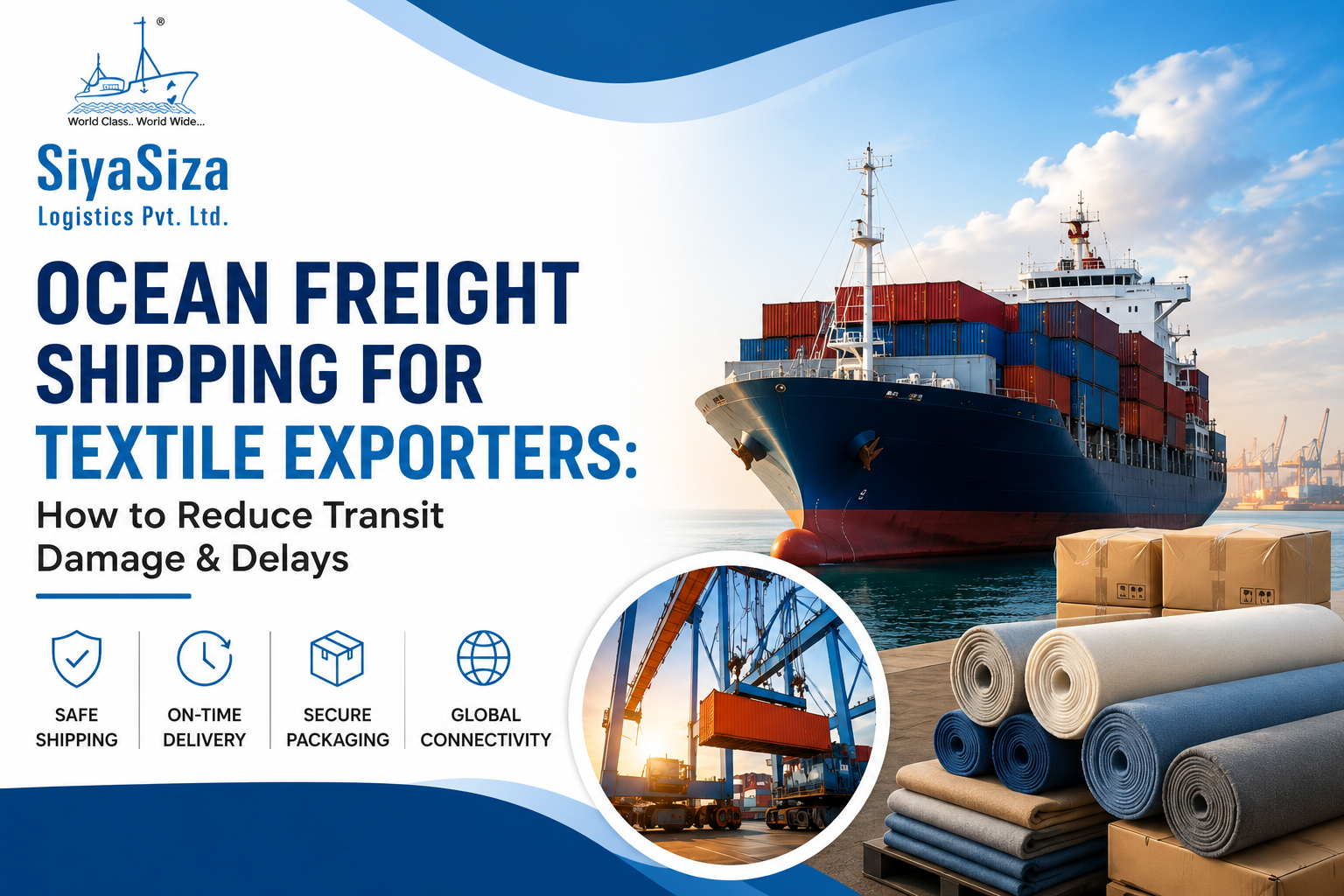
Ocean Freight Shipping for Textile Exporters: How to Reduce Transit Damage & Delays
Textile exporters are all familiar with that experience: they send off their shipment in top condition, only to find out after weeks that there is damaged textile or an extended delivery period. There are many considerations involved in exporting textiles, starting from packaging to delivery at the port. The most cost-effective form of transporting large loads of textiles is through ocean freight. However, without proper planning, you will never know when damages and delayed deliveries happen along the way. Here, we explore why ocean freight shipping for textile exporters makes sense, its sources of damage and delay, and how to prevent them.
Why Ocean Freight is the Preferred Choice for Textile Exporters
For consignment of fabrics in roll form, garments, or domestic textiles, sea freight for textile export becomes the most logical means of transportation. The rate charged for seafreight is much cheaper compared to airfreight on per kilogram basis.
Large capacities are available in vessels that sail in ocean waterways, hence making it possible for large quantities to travel in one shipment. This makes handling easy and avoids any mistakes that would otherwise arise from the use of several shipments.
International Textile shipping through sea mode also links Indian exporters with most ports around the world. If your shipment is headed towards Europe, US, or the Middle East, you can rest assured about having good global connectivity with regular schedules.
Common Causes of Transit Damage During Textile Shipping
However, textile goods may be more delicate than one would think; several problems usually contribute to cargo damage:
High moisture and humidity levels in cargo containers may lead to staining or mildew formation, especially when shipping textiles via sea transport over long distances.
Wrongly packed goods, including thin polyfilm wrapping or poor-quality cartons, make cargo vulnerable to friction and tearing.
Cargo shifting in rough weather conditions can result in damaged boxes if cargo is not properly secured in containers.
Bad cargo handling when loading and off-loading goods can result in the destruction of improperly piled pallets.
Unsuitable selection of cargo containers – use of regular cargo containers for ventilated or climate-sensitive cargo – can also be considered.
What Causes Delays in International Textile Shipping?
Delays usually do not occur from one single factor alone but several minor issues combined.
- Mistakes in customs paperwork, such as mis-matched invoices or inadequate HS codes, lead to clearance delays on either side.
- Port congestion during peak export seasons can push back vessel schedules by days or weeks.
- Problems with shipping, such as scheduling the wrong size of container or missing the deadline for the vessel cut-off, can cause needless delays in the schedule.
- Missing export documents, including packing lists or certificates of origin, are a frequent cause of hold-ups.
- Miscommunication between the exporter, the freight forwarder, and the buyer causes many of these problems. Good planning before dispatch solves these problems easily.
Tips to Reduce Transit Damage & Shipping Delays
Some consistent practices make all the difference in the transport of textiles:
- Pack textiles using moisture-proof materials such as desiccants or liners for humid areas
- Choose an appropriate container depending on the nature and size of the load
- Properly secure any palletized loads
- Accurately label your loads with instructions on handling
- Always ensure that all documentation is done before shipping
- Consistently track your loads
- Collaborate with professionals who have experience handling textile cargo
Why Choose Siya Siza Logistics?
The exporter requires a partner well versed in fabrics, clothing and home textiles as goods as opposed to boxes. Siya Siza Logistics has gained experience through years of dealing with exporters on issues of ocean freight, documentation and custom clearance taking into consideration the aspects that are relevant in this trade.
The company acts as a freight forwarder in Ahmedabad where the company will provide total freight management from bookings, packaging advice, customs clearance assistance, and shipment tracking. The customers will be provided with one point of contact for their queries.
For those businesses seeking reliable freight forwarding in the international business arena, such a hands-on strategy adopted by freight forwarding services in India may be what differentiates a good experience from a bad one. It guarantees reliability in terms of customer support from beginning to end of the process.
Conclusion
Shipping your textiles via ocean freight may still be one of the best options out there, but care must be taken not to experience losses through any damages or delays. With good packing, proper selection of containers, full documentation, and constant tracking, all that would be taken care of. However, what is most important is to find a shipping company that will take charge of your freight throughout the journey. At Siya Siza Logistics, we can handle all your textile exports.
Frequently Asked Questions
1. Why is ocean freight appropriate for exporting textiles?
Ocean freight is economical, capable of handling high volume cargo and linking exporters to overseas markets, thus suitable for the transportation of textile cargo.
2. How do textile exporters avoid damage to cargo?
Employ water-resistant packaging, select the correct container type, ensure proper palletizing, and label cargoes appropriately prior to dispatch.
3. What are the necessary documents when shipping textiles internationally?
Typical documents used in the process include the commercial invoice, packing list, bill of lading, certificate of origin, and any export certificates relevant to the particular cargo.
4. Why should exporters use the services of a freight forwarder in Ahmedabad?
The freight forwarder will have an understanding of regional export patterns and port procedures.